So, back in my early college and FGC days, I went to an anime convention here in MS. It was around the release of Dragon Ball FighterZ, so it was definitely early 2018-ish. While I was there, I saw a couple guys in corner playing a game I had never seen before. That game was Persona 4 Arena:Ultimax. I didn’t know shit; I just went over, talked to them, and started mashing with Narukami. When I went back to the dorms, my friend explained that the game was based on a RPG series called Persona, and this ended up sending me down a rabbit hole.
I ended up emulating Persona 3 FES on my computer and really liked it. However, a very tragic windows 10 update would ruin my dual boot config and forced me to wipe my hard drive and start fresh, dooming my Persona 3 save file and setting me on the path of being a pure Linux user.
I would still go on to play Persona in some fashion, eventually beating vanilla P5 in summer 2019, but I didn’t touch P3 again for a long time.
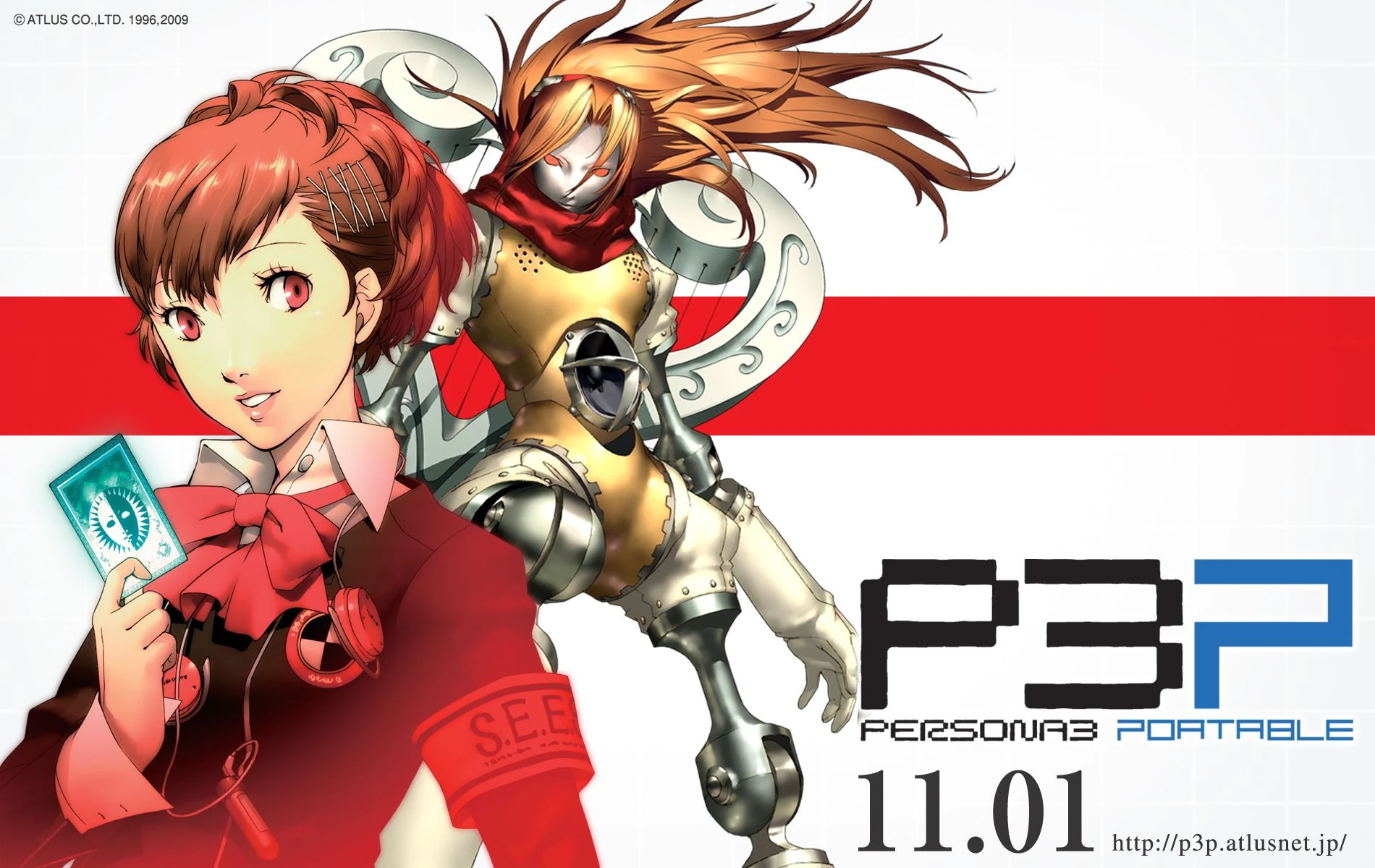
This July marked Persona 3’s 20th anniversary, so I figured it was as a good a time as any to finally run it back. I had already made my decision to prioritize other games during the steam sale, so no P3 Reload for me. So, it was a choice between emulating FES again or playing Portable. I ended up choosing the latter.
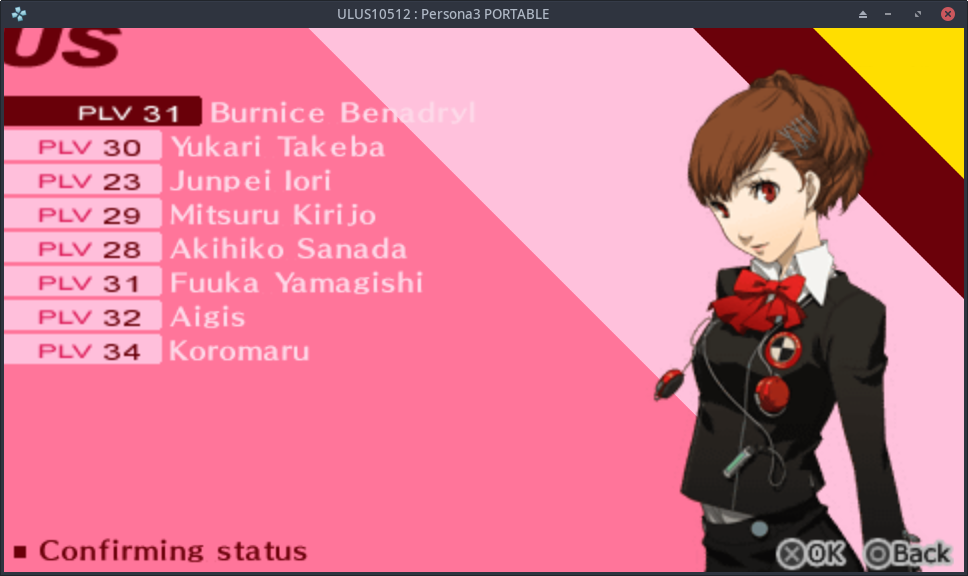
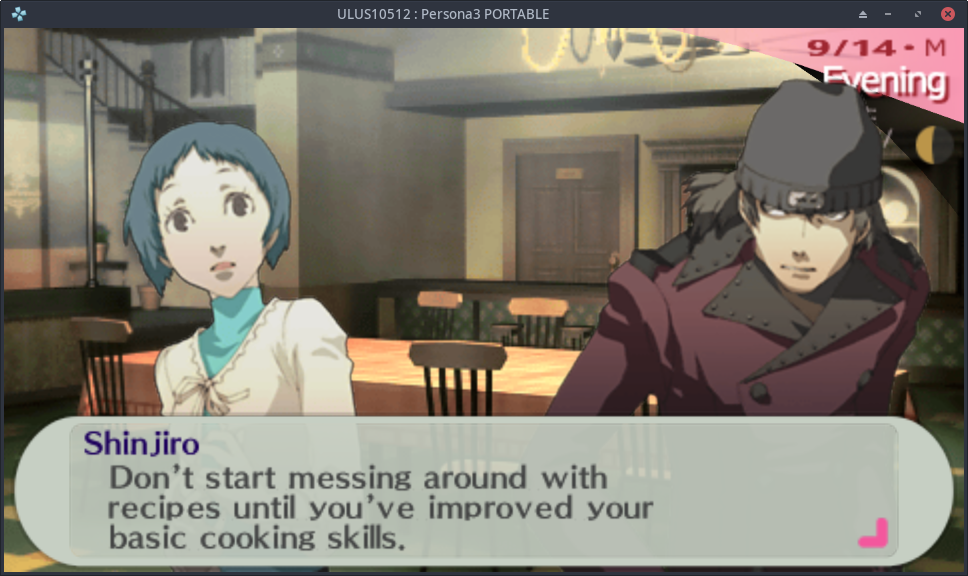
For the uninitiated, Persona 3 was originally a PS2 game, and had a walk-able over-world and 3D custscenes using the character models. In order to get the game to fit on a PSP’s UMD disk, they made the decision to swap those element out for essentially Visual Novel elements. You now fast traveled everywhere using a small menu, environments were conveyed via still images, and character portraits now carried the whole weight of representing the characters.
Honestly, Persona works pretty well in this format. I’d like to put forth the idea that if the game was made with this format in mind from the beginning instead of being a compromise for the hardware, more people would think higher of it. The scenes still carry weight and personally don’t mind not having to walk around to every place. I eventually got the point in P5 where I just fast-traveled everywhere anyway, so doing that from the jump here doesn’t bother me in the slightest.
Persona 3’s cast is way more my speed than P5’s, although both are fantastic. S.E.E.S is honestly a mess of a group, with a lot of tension between its members. For most of this run, they’re kinda like coworkers who live with each other rather than friends, but the bonds do form and understanding does happen. Junpei’s jealousy towards the player character, Yukari’s silent dislike of Mitsuru, Ken’s whole deal with Shinjiro, all of that is in the forefront. But so are the moments where Yukari invites Fuuka and the Female protagonist to spend Christmas together, Akihiko going along with Junpei’s dumb ideas, and Shinjiro cooking for the whole team. They don’t come together the same way the Phantom Thieves do, and they’re all way rougher around the edges than their successors, but when the chips are down, they’ll ride together, be it towards certain doom or absolute victory. Shinjiro, despite only being around for a short while, ended up being my favorite character, in big part of his social link.
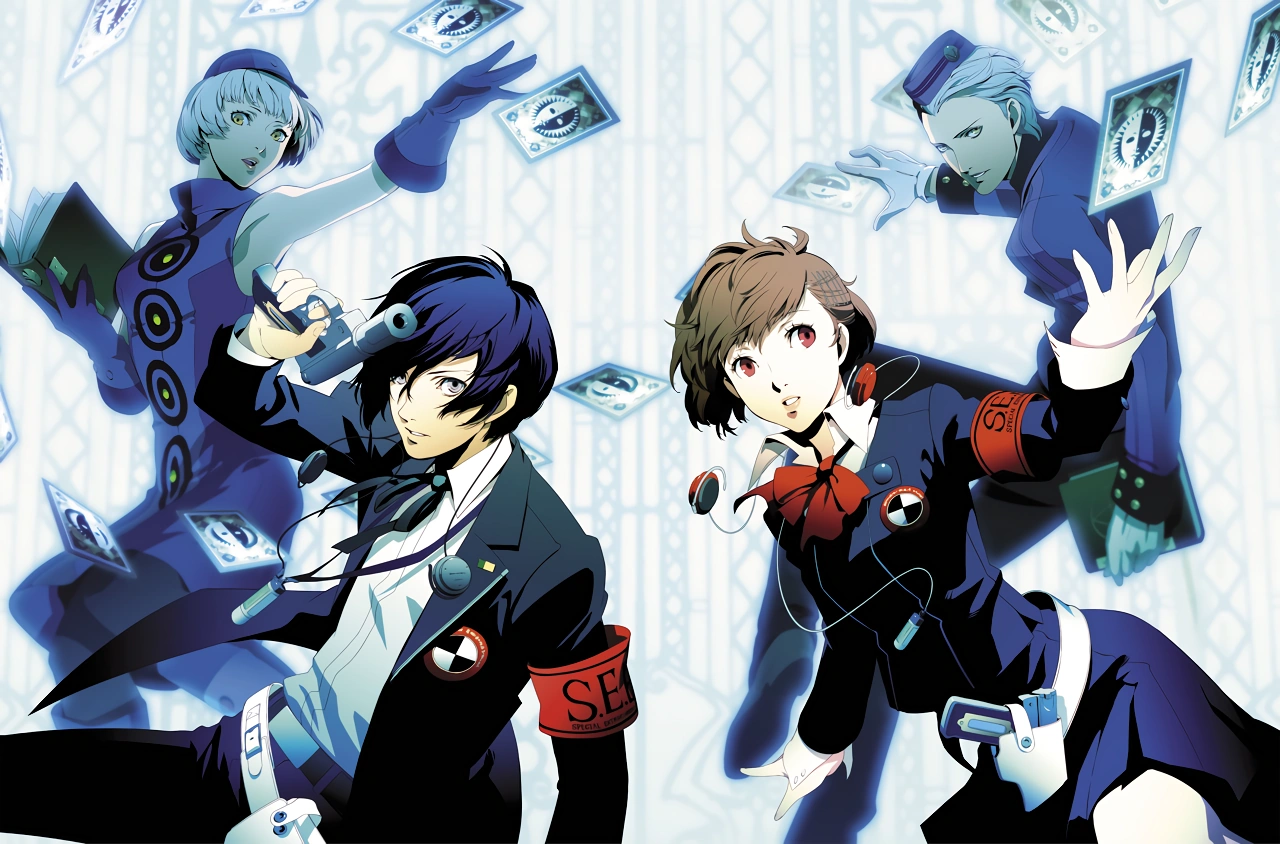
And speaking of Shinjiro’s social link, it’s time to finally mention the other big shakeup Portable has brought to the table - The Female Protagonist, Kotone Shiomi. Kotone goes through the same story that Makoto, the Male Protagonist, does, but with her own flavor that makes it a fresh experience. She uses a different weapon, has different dialogue options, and most importantly, has different social links, notably having social links with every possible party member and can have platonic relationships, whereas Makoto only has S. Links with his female party members and they all end in romance, no questions asked. Shinjiro’s social link is exclusive to Kotone, and it gives him a lot of needed spotlight. His story beats wouldn’t work so well for me if I hadn’t done his social link. It’s kinda like Akechi going from vanilla P5 to Royal. That extra bit of attention goes a long way. Kotone has different social links in some cases, getting a new character named Rio for her Chariot instead of Kazushi. For links that are the same between her and Makoto, there is usually changed dialogue, and potentially, availability. The easiest example is that Yukari’s social link is available way earlier and also has leaner requirements. Fuuka is available at the same time as Makoto, but also has more lax requirements.
Portable, being brought into existence after Persona 4 had already released, has a lot of gameplay QoL that FES doesn’t have, the biggest being controllable party members. You can still have them be controlled by the AI if you’re into that, though. Party members can still get tired, but they will onyl do so once you have formally exited Tartarus. I like this because it still retains some tension without completely removing it like they did in Reload. They also added some small co-op attacks when the player character hits a weakness or lands a crit, which can save some SP if you’re aiming to knock down all foes since this co-op attack will knock the enemy down every time. Overall, I enjoyed combat in P3P a good bit more than P5R; it was more challenging while still being fun. Also, I did a lot more experimenting and fusing in this game whereas I just went “DLC go brrr” with Royal, so if I ever play that game again, I’ll definitely play it more “honestly” without reliance on DLC persona because there are a lot of cool Persona to use throughout the game.
Skill cards are also in the game, which is a godsend for trying to make builds. However, the ability to manually select what skills your personas inherit upon fusion is absent. On top of that, each Persona has an unlisted type of skill it is biased towards inheriting. If you don’t want to waste countless minutes constantly de-and then reselecting personas to reroll fusion skill results, the easiest thing to do is get a bunch of skill cards and try to change the skills you don’t want to show up into skills that the persona isn’t biased towards learning so the skills you do want are more likely to show up. This was legitimately the only frustrating thing in the whole game.
Persona 3’s story is pretty damn good, I’d say, but it does suffer from weak antagonists. I didn’t give a shit about Takaya and Jin in the slightest, which is a problem, because Nyx only shows up in the final month, and is more of a force of the universe than a sentient being you can resent. That’s about it, though. The journey you go on with S.E.E.S is great, and has enough twists and character moments to be compelling. And that ending just breaks my heart. I’ve known about it for years, but finally experiencing it had crying some tears.
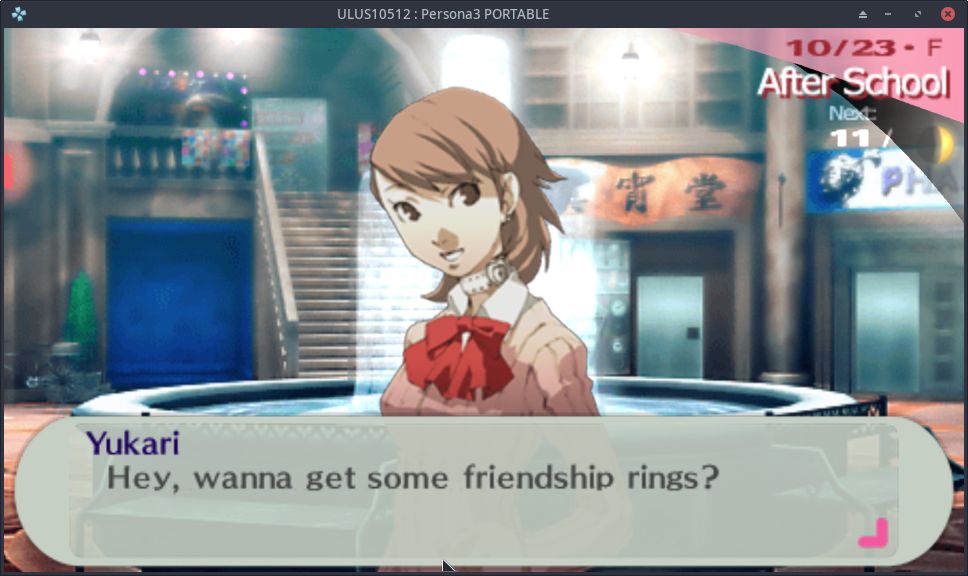
On a related note, I loved Kotone’s social links. Her friendships wit Yukari and Mitsuru stand out a lot to me, and the social links made just for her in Rio and Saori were really touching, especially Saori. Unfortunately, I couldn’t finish Junpei or Akihiko, but I really liked what I saw. Even just learning that Junpei doesn’t have the best home life does a lot to color my understanding of his behavior. We even get a social ink with resident best boi Koromaru. I enjoyed P3’s social links quite a bit, special mention going to Akinari, because boy, that one hurt.
All in all, I’m glad I ran it back with Persona 3, and I’m especially glad I did it with Portable. The Kotone route was great, and absolutely worth it. I truly understand all the P3 love now, and I’m so glad I do.